
March 5-7, 2027
Yokohama丨Japan
March 5-7, 2027
Yokohama丨Japan

Special Session 3: Emergency Control of Urban Power Grids under Extreme Fault Conditions
Chair: Sheng Cai,
Nanjing University of Science and Technology, China
Co-Chair: Hao Wu,
Tianjin University, China
While emergency-related topics can appear within the regular conference program, most existing regular sessions examine urban grid emergency control mainly from the physical power-system viewpoint and seldom adopt the integrated Cyber-Physical-Social System (CPSS) perspective that incorporates information, physical and social factors simultaneously. Grounded in a national major science and technology special project, this session emphasises CPSS-driven full-lifecycle emergency workflows including pre-disaster preparation, in-event disposal and post-fault restoration for urban extreme faults. It delivers focused, cohesive discussions bridging utility practice and academic modelling, which cannot be well-covered by scattered, general-purpose presentations distributed across multiple regular tracks.
This session targets emergency operation, resource scheduling and power restoration for urban power grids under extreme fault conditions caused by typhoons, rainstorms, ice-coating and other natural disasters. It investigates multi-time-scale risk assessment, interdependencies across power, transportation and communication infrastructures, optimisation of heterogeneous emergency resources, and adaptive restoration strategies. It integrates theoretical modelling, prototype tool development and utility-oriented engineering practices to strengthen urban grid resilience against high-impact natural hazards.
We welcome interdisciplinary contributions from operations research, industrial engineering, economics, statistics and policy science are looking forward to sharing your outstanding research outcomes.
1, submit it via the link: http://www.easychair.org/conferences/?conf=cpeee2027 (after entering the link, click on the corresponding topic)
2, send your manuscript to cpeee_conf@126.com with subject "Submit+Special Session-3+Paper Title".
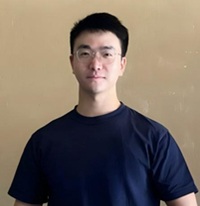
Sheng Cai received the B.S. degree in electrical engineering and automation and the Ph.D degree in control science and engineering from Nanjing University of Science and Technology (NJUST), Nanjing, China, in 2016 and 2022, respectively. He was a visiting student with the Center for Electric Power and Energy, Technical University of Denmark (DTU) from September 2019 to August 2020. Currently, he is a postdoctoral researcher with the Automation School, NJUST, Nanjing. His research interests include modeling of resilient distribution systems, service.